
Juyel Raaj-
On the night of April 25th, Munira Mahjabin Mimo a student of the Department of Theatre and Performance Studies at Dhaka University, committed suicide. She left behind a note mentioning the names of a teacher from her department and a close friend. However, she did not hold them responsible for her death. Instead, she wrote: *“50 thousand Taka must be given to Sudip Sir; Hani and Sir, stay well; Sir’s gifts must be returned.”* Based on this note, the police detained teacher Sudip Chakraborti and Mim’s friend, Hani, for questioning. While Hani was released after signing a bond, Sudip Chakraborti was sent to jail.
On the same day the court granted a three-day remand for Sudip Chakraborti following this note, a final police report was submitted regarding another case: the suicide of Sharnamoyee Biswas, a graphic designer and journalist at the online news outlet ‘Dhaka Stream.’ After a lengthy investigation, the police officially termed her death a “suicide.”
Following Sharnamoyee’s death, allegations of provocation and sexual harassment were raised against Altaf Shahnewaz, the Bengali Content Editor of Dhaka Stream. However, the police report identified family issues, rather than harassment, as the primary cause of her death. The remand and denial of bail for Sudip Chakraborti, coinciding with the verdict of Sharnamoyee’s case, become coincidentally relevant.
After Sharnamoyee’s suicide, an organized online campaign was built by bringing forward an old workplace grievance. This campaign did not just target Altaf Shahnewaz; it nearly destroyed the social, private, and economic lives of his wife, Fatema Abedin Nazla, and her business, N’s Kitchen. It wasn’t about police investigation, court verdicts, or justice; it became a manifestation of vengeance against Altaf Shahnewaz and his wife.
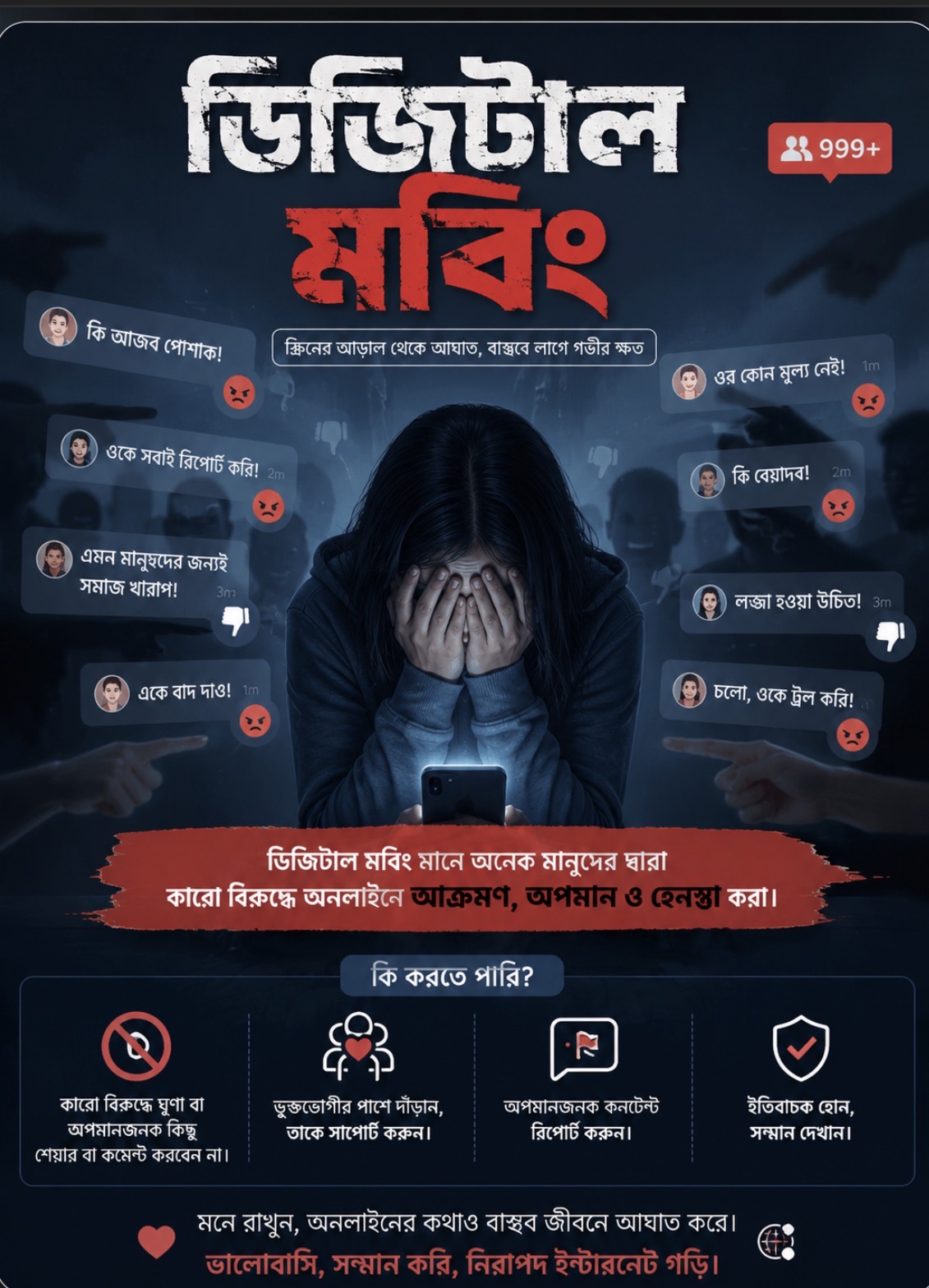
Now, when the court has concluded after a long investigation that there was no involvement of Altaf Shahnewaz in Sharnamoyee’s suicide, the “verdict” had already been passed on social media long ago—against both him and his wife. If one looks at the social media landscape of that time, it is surprising that Altaf Shahnewaz is even still alive! Has anyone apologized to him for that digital mobbing? No.
Following Mimo’s suicide, we see a repetition of the same pattern. None of us truly know the mystery behind Mim’s tragic death. Yet, fueled by her note, social media has become vocal in demanding Sudip Chakraborti’s punishment, which actually hinders the path to justice. Whether Sudip Chakraborti actually provoked Mim to suicide can only be determined through a proper police investigation.
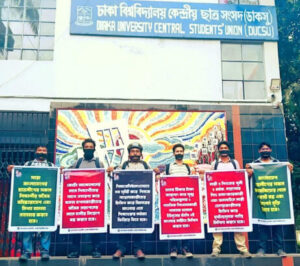
But even before that, everyone—from the students of the department where he teaches to fellow teachers and social media users—has started a “trial of moral education.” They have opened a ledger of personal grievances and complaints. Instead of seeking justice for Mim, there is a desperate rush to assassinate Sudip’s character and prove him a criminal. Before the underlying cause of Mimo’s suicide could be proven, people began demanding reforms regarding internal corruption, nepotism, and teacher recruitment in her faculty, making Sudip Chakraborti the scapegoat of that campaign.
This is exactly what happened to Altaf Shahnewaz after Sharnamoyee’s suicide. More urgent than the character certificates of Altaf Shahnewaz or Sudip Chakraborti was the discussion on what we should do to prevent suicide. There should have been widespread discourse on why such brilliant minds choose this path, the creation of state-level mental health services at universities and workplaces, and ensuring an environment where no other Sharnamoyee or Mimo has to take such a step. Instead, we chose an “Online Trial.” If the person on the other side is not mentally strong enough, this public trial pushes them toward a different kind of death. In our demand for justice, we fail to consider whether we are committing an injustice against another life.
The case filed by the victim’s family alleges that Sudip Chakraborti had a personal relationship with Mim. On the night of the incident, Mim reportedly broke down mentally after a video call with him, leading to her suicide. The family further claims that WhatsApp messages and call records on Mim’s phone suggest a relationship and communication between the two.
The case has been filed under Section 306 of the Penal Code. Regarding this, legal experts say that to convict someone under this section (Abetment of Suicide), mere proof of a relationship or conversation is not enough; there must be direct or indirect evidence of provocation.
Immediately after Mimo’s suicide, a long phone conversation of her mother went viral. In it, the mother describes to a friend of Mim the state of her relationship with her parents, her mental breakdown after her boyfriend married someone else on the 5th of last month, her lifestyle with male friends, her first failed marriage, and her recurring tendency to self-harm or commit suicide. The mother repeatedly mentioned how helpless she felt. Just as Mimo’s life was her own, spreading these private matters on social media to issue “character certificates” is also entirely inappropriate.
On the 25th, the evening before her death, CCTV footage shows Sudip Chakraborti leaving an office meeting while pacing and talking on the phone. Who was on the other end? No one has asked. The conversation with Sudip happened at 1 AM, and Mimo committed suicide around 5 AM—nearly four hours later. What happened in her life during those long four hours? The university administration is bound to provide all footage if the court requests it. But making these things public instead suggests a certain level of bias.
It is proven that Mimo committed suicide. If Sudip Chakraborti is legally responsible for that suicide in any way, he will surely face punishment. The law should be given that opportunity. But before that, by dragging Mim’s family, her private life, Sudip’s long career, and his personal life into the mud in the name of “justice,” we have made everything miserable.
An online trial is not a solution; rather, it paves the way for another death. If we want to be a truly humane society, we must stop spreading hatred and allow for a healthy investigation. May Mim’s “Sea of Sorrow” (*Bishad Shindhu*) not drown the humanity within us; rather, let it teach us to ask—why has our environment become so toxic?